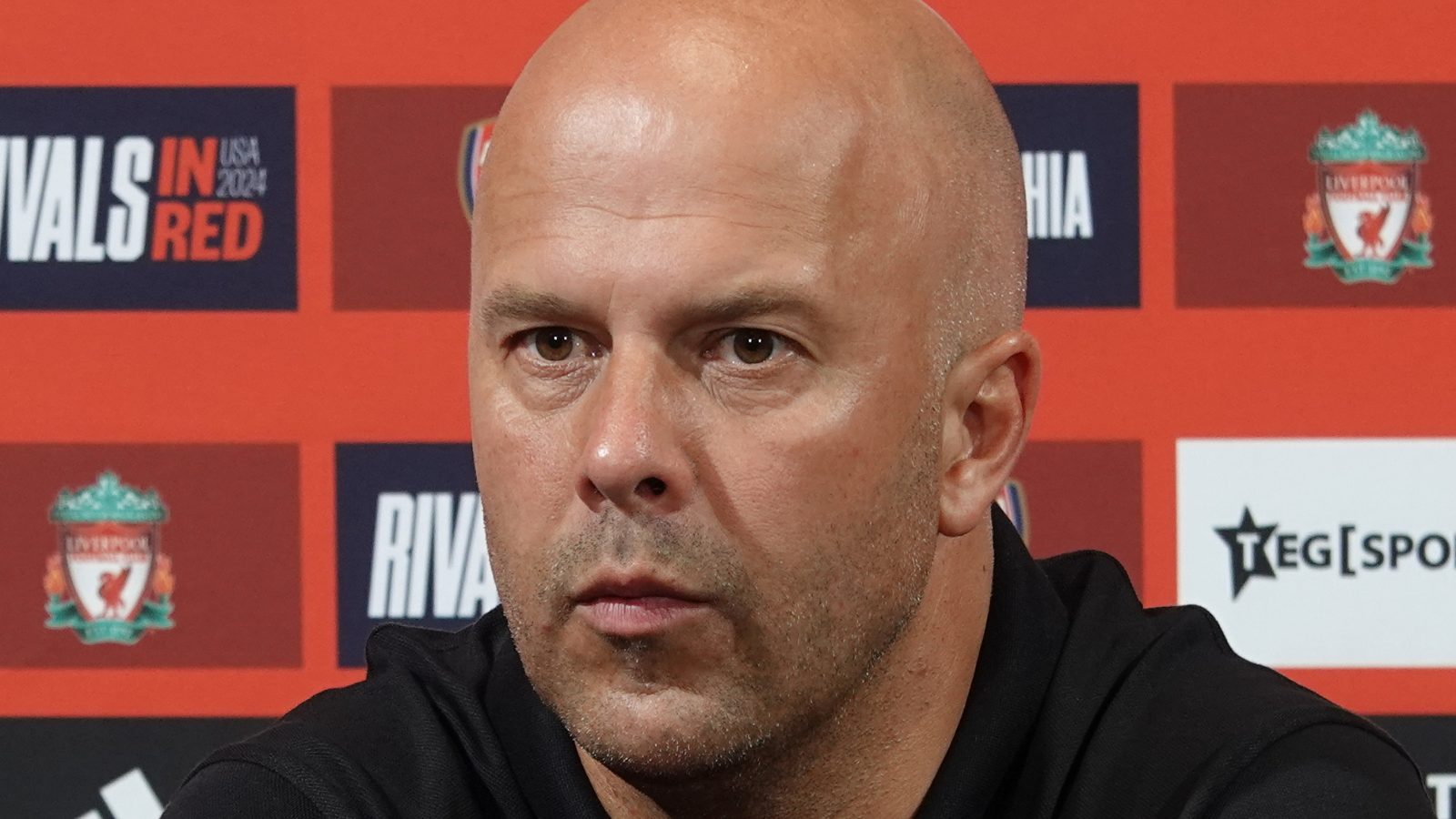
Arne Slot has said a lot of unusual things in press conferences this season, but his latest comments after the 2-1 defeat to Wolves might be the most perplexing.
Liverpool spent the first half doing nothing, and only began to threaten in the final ten minutes of the match after Wolves snatched the lead late on.
After another late collapse, Slot was asked why it took so long for Liverpool to start troubling Jose’ Sa’ in the Wolves goal.
His answer seemed to border on delusion.
“The approach is not different; the approach is we want to have the ball as much as possible, and we want to have it back as soon as possible. So, we always press high and when we have the ball we try to attack.”
Press high? Really?
Liverpool did many things in this game, almost all of them terribly, but one thing fans did not associate this game with, nor Liverpool’s performances this season, was high pressing.
The eye test said Liverpool played exactly like they have been all season. Passive, cautious and lethargic. Three words I associate with my work performance review, but not with a high-press.
If, like me, his comments have left you somewhere between booking a visit to Specsavers and wondering what Slot has been smoking at the AXA, then you’ll want to read on.
Does Slot have a point?
After looking at the data like a massive nerd, I realised Slot was half right, actually.
At first glance, the stats suggest that Liverpool are indeed the high-pressing side that Slot makes out.
Overall, Liverpool allows the opposition just under 10 (9.83) passes before attempting to win the ball back. This metric is known as PPDA (Passes per defensive action). Their average PPDA puts them in a respectable sixth place in the Premier League this season, and in line with teams associated with high pressing, like Andoni Iraola’s Bournemouth.
| Team | PPDA |
| Chelsea | 9.11 |
| Brighton | 9.27 |
| Arsenal | 9.43 |
| Bournemouth | 9.59 |
| Newcastle United | 9.7 |
| Liverpool | 9.83 |
| Manchester United | 10.16 |
| Tottenham | 10.31 |
| Manchester City | 10.8 |
Source: Understat
Against Wolves, Liverpool had a PPDA of 7.14, which is their 7th highest of the season. Baffling, I know. It’s not quite the high of 4.14 we put out against 10-man Burnley in August. Still enough to make your hamstring twinge.
Don’t be fooled by ‘false positives’ in Liverpool’s press
However, whilst Liverpool’s PPDA seems respectable, there are some caveats to this metric.
Firstly, this statistic can be heavily skewed in favour of teams that dominate possession, and Liverpool definitely do that. Their average of 60.2% is the highest in the Premier League this season. Moreover, they also possess the third-highest field tilt in the league, with 61.05% of their touches coming in the final third.
This means Liverpool’s PPDA statistics are likely to be low because the Reds are already camped around the opposition’s 18-yard box when they lose the ball. To put it another way, they are already close to the opposition when they lose it.
This brings me neatly to the other problem with PPDA. PPDA only considers attempts to win the ball back after so many passes, and those attempts can be as passive as throwing a halfhearted leg at a keeper’s hoof upfield.
In other words, PPDA is a solid indicator of what a side intends to do. By looking at the statistics, we can see Liverpool certainly intends to press high. However, it says nothing about whether they act upon those intentions out on the pitch, and this is where, as we shall see, Slot’s comments begin to fall apart.
But in order to show how poorly Liverpool’s ‘high-press’ is executed, it is worth comparing how Slot’s intentions compare with Jurgen Klopp’s. After all, much has been said about how Liverpool’s style of play is a shadow of the “heavy metal” football enjoyed under Slot’s predecessor.
How do Slot’s intentions compare with Jurgen Klopp’s?
From the stats, we can see how Liverpool’s intention to press high was consistent throughout Klopp’s time at Anfield, and more intense. Across his eight full seasons at the helm, the Red’s posted an average PPDA of 8.56.
Therefore, generally speaking, we are right to say Liverpool are lacking the intensity they showed under Klopp. However, there is one particular season that proves to be a particularly damning comparison for Slot.
Of all Klopp’s Liverpool sides, the 18/19 team bears the most similarities to Slot’s current side. Registering an average PPDA of 9.9 and 62.3% possession, Liverpool were pipped to the title by a relentless Manchester City side in the same season they won the Champions League.
With Liverpool posting similar PPDA and possession in 25/26, the question is this: If Liverpool’s intentions are the same as the campaign that brought the Champions League title, why then are the Reds so poor this time around?
The answer is execution.
Liverpool are sheep in wolves’ clothing
We have established Liverpool are high, but it’s the second part that is missing for the Reds this season. Unlike this season, it was the second part, pressing, that Klopp’s sides excelled in.
The work ethic and defensive acumen of that front six effectively pulled Liverpool to the verge of a Champions League and Premier League double that season. Klopp and his players didn’t just intend to play on the front foot – they actually did it, and the stats show it.
If you look at the action stats from 18/19, Liverpool’s midfielders and strikers were superior in almost every department. Between Fabinho, Gini Wijnaldum, Jordan Henderson, Roberto Firmino, Sadio Mane and Mo Salah, the Reds put in the donkey work.
They recovered possession more often in the final third. They put in more tackles and interceptions. They also won a higher percentage of those duels. The intent was the same, but the execution was far better.

Source: FotMob
The only thing the current crop beats them in is being dribbled past less and winning more headers. But when you consider the fact that they attempt far fewer tackles overall and are offered more opportunities to win aerial battles with opponents going long more often, it looks far less impressive.
Liverpool are just high
You’ll never walk alone – unless you are on the visiting side at Anfield. Time after time, our opponents can waltz through Liverpool’s entire press unopposed. It’s all good dominating possession and being near the opponent, but it means nothing if you don’t close them down – as the Reds are finding out this season.
Slot is right to say Liverpool play high, but they do not press. Rather than get into the opposition, they seek to block passing lanes. That is a high-block, not a high press. We are passive, not active.
Before I start doing my best impression of Roy Keane – smash into someone, just to make me feel better – I’m going to stop there.
The point is, Liverpool used to hunt you down under Klopp. The intention may still be there under Slot, but the only Wolves on the pitch at Molineux were wearing gold and black.
(Featured Image: JoeSchilp , CC BY-SA 4.0, via Wikimedia Commons.)


Leave a Reply